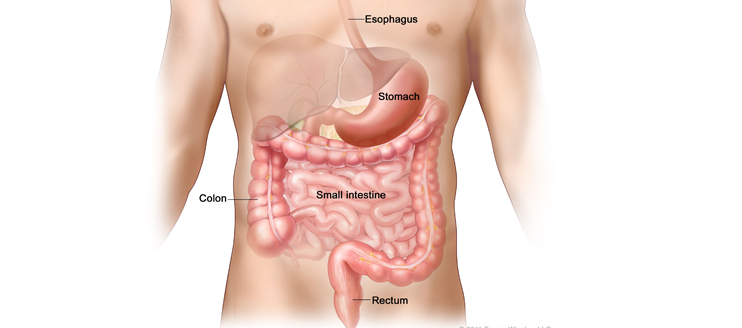
The Gastro Intestinal tract can be likened to a tubular structure with varying dimensions and functions. It starts from the mouth which sends the food we intake after chewing to a long tubular food pipe the oesophagus which extends from the back of our throat through the back of our chest in the middle to the stomach. The stomach is a voluminous balloon like organ that serves as a reservoir for all the boluses of food we eat at meals and grinds it to a thin paste admixed with gastric secretions - Chyle which is then passed on into a twenty two feet long soft rubber tube like small intestine for digestion with the assistance of bile from the liver and pancreatic juices. Eventually this digested food reaches a capacious 7 foot long large intestine where nutrients are absorbed and the left over residue is converted into formed stools that are stored in a reservoir - the stool bag - or the Rectum which is the last part of the large intestine. Control of defecation or continence is maintained by a pair of valve like sphincters - the internal ( involuntary) & external ( voluntary) in the anal canal.
Any tumor involving this digestive tract can hamper the daily process and cause discomfort and complications.
Timely reporting of any signs and symptoms listed above could enable early diagnosis and detection of GI cancers at an early stage making them more amenable to curative therapeutic options.
Most GI Cancers can now be offered Minimal Access Surgery for treatment using Laproscopy / Thoracoscopy over open surgery.

Presently associated with Jupiter Hospital, Thane, P.D. Hinduja Hospital, Khar, Holy Family Hospital, Bandra & Halani Health Care, Sion.
© 2022 Dr Navin Bhambhani. All Rights Reserved.